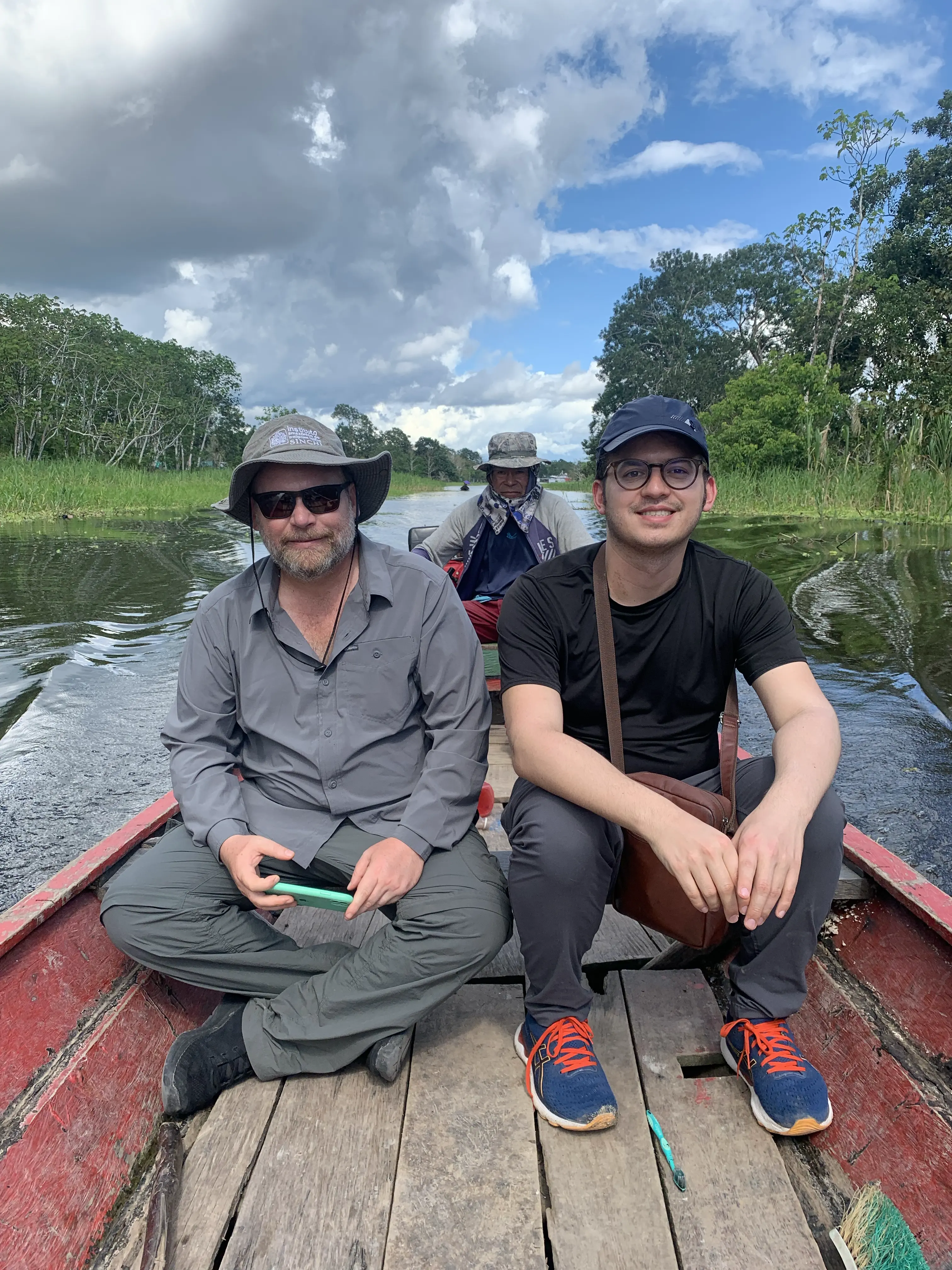
MIT students during fieldwork for the DUSP Practicum 11.S196/11.S938 "Biodiversity and Cities," Port of Leticia, Colombia, 2023. Photo by Marcela Angel.
Biodiversity and Cities: Pathways for Cities in Biodiversity-rich Ecoregions
2022 - 2025
NACERA
SIERA
UMERA
Project Team
Marcela Angel, CO-PI
Norhan Bayomi, CO-PI
John E. Fernández, Faculty Director
Marco Herndon, Research Associate 2024-25
Project Collaborators
MIT DUSP
Gabriella Carolini, professor 11.S196/11.S938
Alessandra Fabri, Teaching Assistant 2022 - 2023
Publications 2025
Inter-American Development Bank
Science Panel for the Amazon SPA
Leticia Practicum 2023
Amazonian Scientific Research Institute SINCHI
Ministry of Environment and Sustainable Development
Leticia Municipality
National University of Colombia, Amazonia Campus
Indigenous and local communities Capiul, Nazareth, and Isla de la Fantasia
Quibdó Practicum 2022
Ministry of Environment and Sustainable Development
Ministry of Science, Innovation and Technology
Alexander von Humboldt Biological Resources Research Institute
Los Andes University
Environmental Research Institute of the Pacific IIAP
Quibdo Municipality
Afro-descendant Community of Tutunendo
Supported By
MISTI, Global Seed Fund
MIT Department of Urban Studies and Planning
MIT Department of Architecture
A biodiversity-based planning framework established through place-based research in critical ecoregions and global biodiversity hotspots, focusing on Amazonian and Biogeographic Chocó cities. The framework advances global conservation goals while centering the environmental priorities of local and ethnic communities.
Biodiversity is declining worldwide, driven foremost by the intensification in land management and the transformation of natural areas for agriculture, industrial-scale forestry production, and human settlements. Urban areas have doubled since 1992 and, compared to 2020 baselines, are projected to expand between 30% and 180% until 2100, depending on the scenario applied. Notably, most of the urban growth is often located in regions of high biodiversity and affects ecosystems far beyond urban areas, through resource demands, pollution, and climate impacts. Therefore, biodiversity conservation in urban areas needs to be approached in a way that supports global conservation efforts.
Biodiversity conservation through urban-regional strategies in an emerging field. There are significant gaps in our understanding that are critical to improving biodiversity conservation policies and management in urban areas that need to be analyzed, tested, and addressed to improve global biodiversity outcomes. Our work on biodiversity and cities focuses on research and education, contributing to two major publications featured at the UN Climate Change Conference (COP30) in Belém do Pará: the chapter "Integrated Approaches to Territorial Stewardship – Environmental Governance" in the IDB monograph Cities in Amazonia: People and Nature in Harmony, and the policy brief Sustainable Cities and Towns in the Amazon by the Science Panel for the Amazon (SPA). Additionally, our educational approach and place-based research features the Colombian cities of Leticia and Quibdó as central case studies within the DUSP/ARCH practicum Biodiversity and Cities.


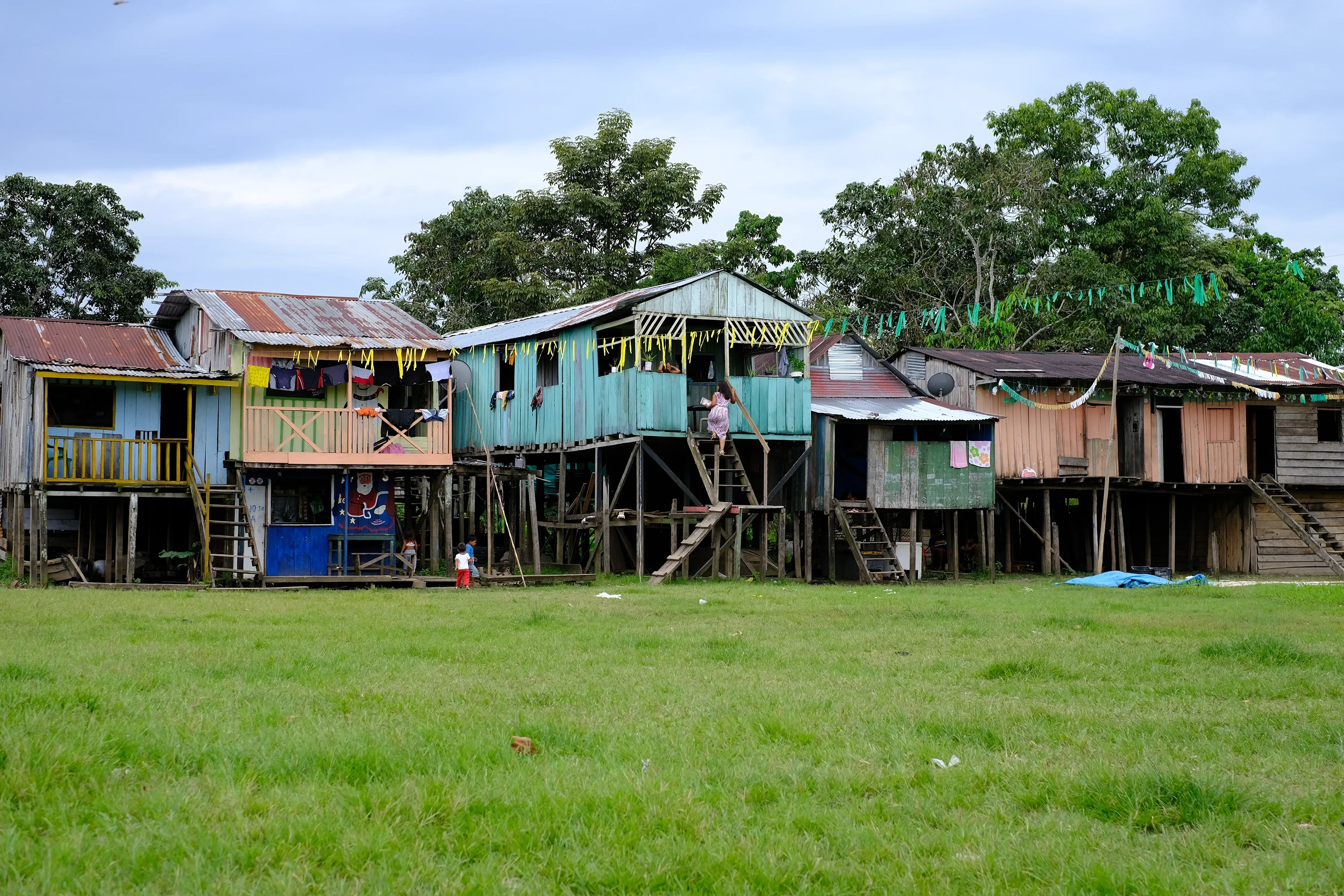
BiodiverCities: Puerto Nariño and Leticia (Amazonas), and Quibdó (Chocó), Colombia. Fieldwork and site visits, 2022 and 2023. Photos by Jimena Muzio, María Daniela Castillo, and Marcela Angel.
Sustainable and Resilient Amazonian Cities
While the Amazon is frequently conceptualized as a vast, pristine tropical forest, it is increasingly defined by its rapidly growing urban settlements, with urban populations surpassing 70% in several countries. In the Brazilian Amazon alone, urban centers have grown by nearly 10% each decade since 1970, driven largely by expanding municipalities under 50,000 people. These cities are frontline responders to the planetary poly-crises of climate change, biodiversity loss, and pollution. They hold a critical dual role: managing direct environmental impacts for their residents while indirectly alleviating pressure on adjacent protected areas and community-managed ecosystems.
Addressing these complex, interdependent urban-regional dynamics requires a fundamental paradigm shift in how urban centers are understood, developed, and governed. Rather than viewing these cities as isolated entities or mere drivers of environmental degradation, our framework recognizes them as a dynamic system of interconnected urban corridors whose ecological footprints extend far beyond jurisdictional boundaries. By leveraging their concentrated innovation capacities and economic resources, these centers can transition away from extractive trajectories and toward alternative development models deeply grounded in the biological and cultural wealth of the Amazonian territory. To unlock this potential and overcome systemic barriers, we argue for an integrated approach across four interlinked domains:
Integrated Environmental and Land-Use Planning: Bridging capacity and knowledge gaps by deploying advanced spatial planning tools, leveraging techno-scientific innovations, and integrating diverse knowledge systems to enable evidence-based, ecologically and culturally sensitive growth alongside the systematic implementation of Nature-based Solutions (NbS).
Socio-bioeconomic Development and Infrastructure: Aligning biodiversity conservation with regional economic development models and policies as well as alternative infrastructure and service delivery models rooted in nature-based and community-based solutions.
Indigenous-based and Participatory Planning: Institutionalizing inclusive planning frameworks that explicitly recognize, protect, and integrate the rights, traditional knowledge, and priorities of Indigenous and local communities into urban development strategies.
Multi-level Governance and Finance: Strengthening the fiscal, regulatory, and technical capacities of subnational governments to mobilize resources at the scale necessary to safeguard the Amazon as a vital global commons.

Inventory of strategies along the four interlinked domains. Graphical abstract for the chapter "Integrated Approaches to Territorial Stewardship – Environmental Governance" in the IDB monograph Cities in Amazonia: People and Nature in Harmony, co-authored by Angel and Herndon.
A Perspective on Colombian Cities: Quibdó and Leticia
To test and operationalize these urban-regional strategies, our work bridges high-level frameworks with specific territorial realities. Colombia, the most biodiverse country per square kilometer, has been a pioneer creating policies and programs to foster biodiverse and resilient cities. In 2021, the Ministry of Environment of Colombia, in coordination with the Humboldt Institute and local leadership across 14 municipalities, launched the BiodiverCities national program to merge cutting-edge research with practical, nature-positive urban development. This initiative was informed by the World Economic Forum's Global Commission on BiodiverCities by 2030. Within the inaugural national cohort, the cities of Leticia and Quibdó stand out as uniquely critical, situated in biodiversity-rich regions that serve as strategic global carbon sinks and frontline conservation areas.
It is within this context that the class Biodiversity and Cities was established, offered as Architecture workshop 4.S23 in Spring 2022 focused on Quibdó, and DUSP Practicum 11.S196/11.S938 in Spring 2023 focused on Leticia. The course addressed the relationships between urban environments and biodiversity, how urban biodiversity influences ecosystem functions and underlying services that affect human well-being and whether urban habitats are hotspots or ecological traps (or neither) for biodiversity. Students explored these dynamics across eight core thematic areas: 1) relationships between biodiversity, climate change and cities, 2) tensions between urban development and conservation, 3) biodiversity response to technological change in building technologies and urban systems, 4) participatory planning within a context of “scarcity”, 5) ecosystem services and environmental equity, 6) colonization and urbanization of Amazonia, 7) monitoring and modeling ecological systems, and 8) urban expansion and biodiversity and explored several questions such as: which synergies and trade-offs among biodiversity and ecosystem services exist in urban areas, which factors drive the relationships between biodiversity and socioeconomic and environmental drivers at different spatial scales, how can we leverage the power of computing and data in gaining insights on biodiversity, and how do urbanization-induced changes affect ecosystem functions and ecological networks’ complexity and diversity.
Through immersive, week-long fieldwork in both municipalities, rigorous literature reviews, and active participation in class discussions, students assessed how advanced biodiversity monitoring, nature-positive environmental design, regional bioeconomy strategies, and participatory planning frameworks can be operationalized to enhance urban ecosystems. By analyzing these complex variables across diverse spatial scales, the practicum translated first-hand insights and national and international best practices into contextualized urban strategies for the cities of Leticia and Quibdó. Ultimately, this process culminated in a comprehensive framework of tailored recommendations designed to advance biodiversity conservation while centering the environmental priorities of ethnic communities and local stakeholders in each city.


Site visits and community engagement process for the DUSP Practicum 11.S196/11.S938 "Biodiversity and Cities" in Leticia, Colombia, 2023. Photos by Azania Umoja, Lauren Moore, and Marcela Angel.
11.S196/11.S938 Teaching team: Gabriella Yolanda Carolini, John E. Fernandez, Marcela Angel, Norhan Bayomi, Alessandra Fabbri. Students: Vineet Abhishek, Patricia M Garcia Iruegas, Marco L Herndon, Rebecca H Houston-Read, Joris Komen, Courage Kpodo, Maria Jimena Muzio, Enrique B Montas, Lauren C Moore, M Rizki Rayani Ramadani, Amelia Seabold, Linh Trinh, Azania Umoja.


Site visits and community engagement process for the Architecture Workshop 4.S23 "Biodiversity and Cities" in Quibdó, Colombia, 2022. Photos by Yujie Wang and Marcela Angel.
4.s23 Teaching team: John E. Fernandez, Marcela Angel, Norhan Bayomi, Alessandra Fabbri. Students: Maria Daniela Castillo, McKenzie Humann, Jimena Muzio, Trinity Stallins, Yujie Wang, Rose Winer.
Related Publications
Related News