Urban Metabolism Typological and Environmental Resource Assistant (UMTERA)
2022 - Present
UMERA
SIERA
Project Team
PI: Prof. John E. Fernandez
Lead Researcher: Dr. Norhan Bayomi
Project Collaborators
Bangkok, Thailand; Ben Guerir, Morocco.
Supported By
Bangkok Bank, Environmental Solutions Initiative, University Mohammed VI Polytechnic Research Program
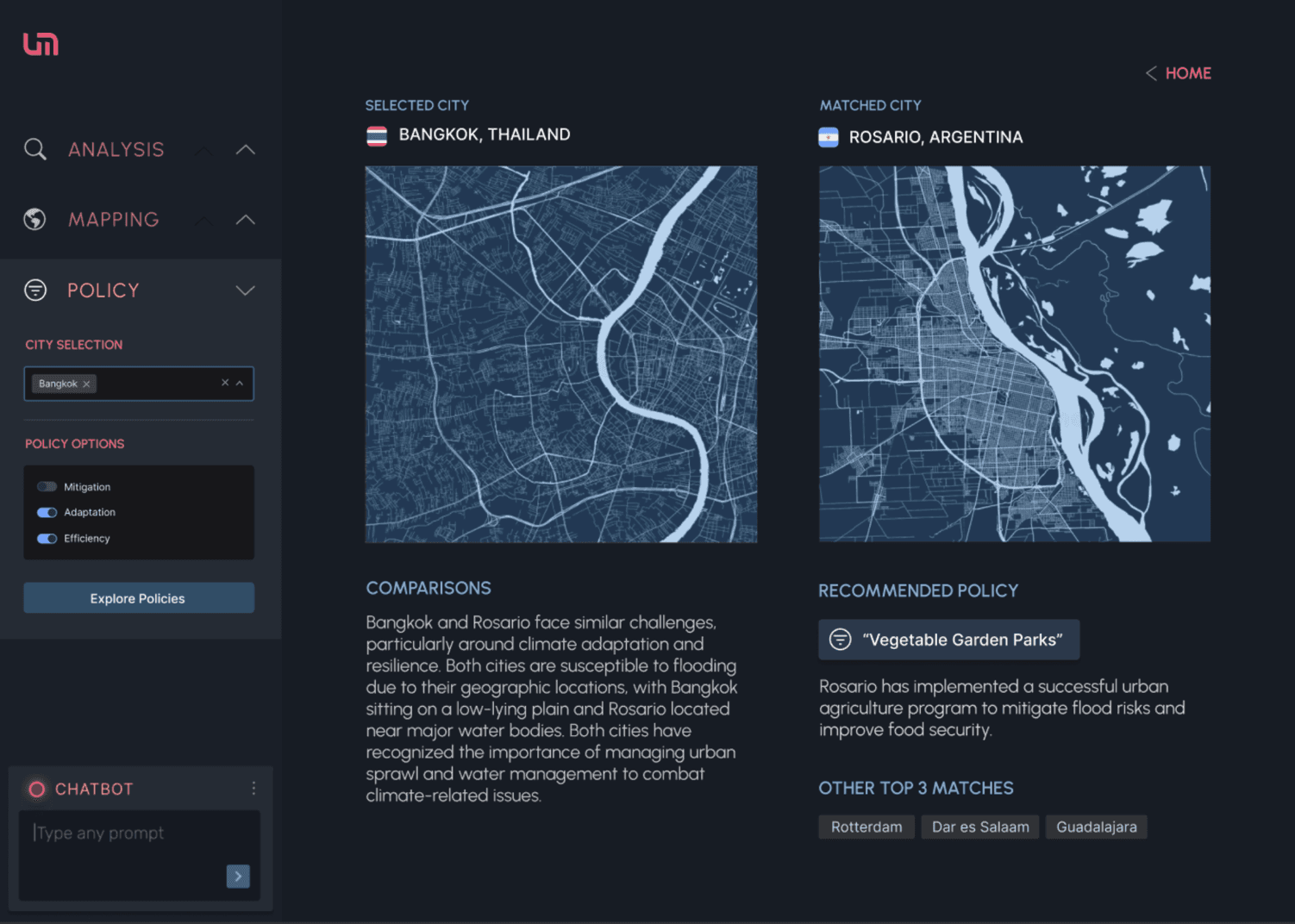
An interactive global platform that integrates urban metabolism science, machine learning, and satellite-based data to enable comparative, data-driven analysis of urban typologies across 11,000 cities globally and 195 countries.
UMTERA is an interactive analytical infrastructure developed by the Urban Metabolism Group to support global-scale exploration of urban systems through the lens of resource metabolism, land characteristics, and climate-related impacts. The platform integrates harmonized city- and country-level datasets spanning urban population and demographics, energy, water, and food consumption, emissions profiles, vegetation and land cover, weather conditions, and climate hazards and risks.

At the core of the platform is a flexible clustering framework that enables users to construct urban typologies based on selected indicator domains, spatial scales, and temporal scenarios. Rather than relying on predefined geographic or income-based classifications, UMTERA groups cities by their functional and metabolic similarities, revealing patterns often obscured by conventional regional categorizations. These typologies are designed for comparative analysis and exploratory insight, not ranking or prescriptive evaluation.
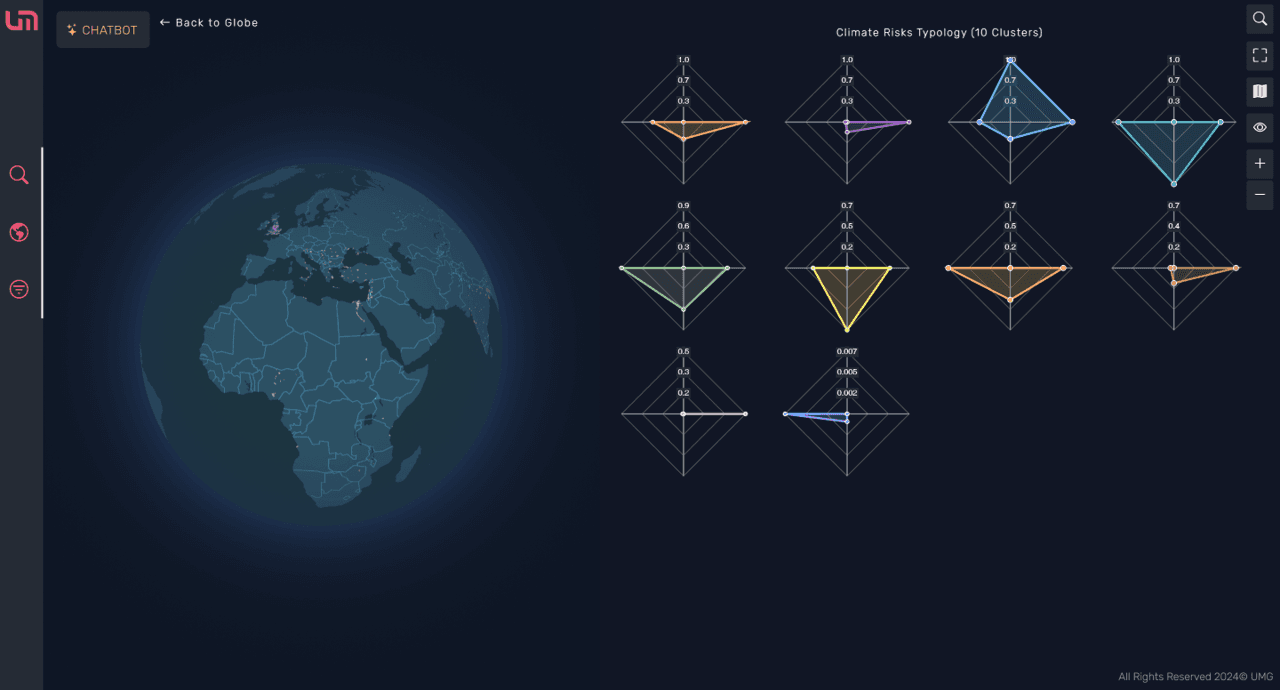
The platform distinguishes clearly between climate hazards, exposure, and impacts, aligning with established climate risk frameworks. Users can explore how different cities experience diverse climate challenges, such as heatwaves, flooding, storm surge, or urban heat island effects, without collapsing heterogeneous risks into a single composite score. Temporal controls allow comparison across baseline and projected years using scenario-based inputs, supporting analysis of potential shifts in urban profiles under changing conditions.
UMTERA is intended as a scientific research and discovery tool for scholars, policymakers, and practitioners seeking to understand global urban diversity and identify structurally or metabolically comparable cities. By enabling peer-city comparison grounded in data rather than proximity, the platform supports new ways of thinking about urban climate action, adaptation, and knowledge transfer across contexts.